• Skip to main content

Society for the Neurobiology of Language

  • Home
    • SNL Account
    • Contact Us
  • Society
    • About SNL
    • Membership Information
    • Member-Initiated Virtual Activities
    • Society Organization
    • Student/Postdoc Representative
    • Code of Conduct
    • Society Journal
    • SNL Bylaws
    • Past Meetings
    • Past Board Members
    • Future Meetings & Proposals
  • Attend
    • Dates & Deadlines
    • Meeting Registration
    • Presenter Information
      • Speaker Instructions
      • Poster Information
      • Slide Information
    • Hotel Reservations
    • Accessibility Information
    • Venue Information
    • Visit Geneva
    • Educational Courses
    • Caregiver Support
    • Onsite Lunch
    • Networking
    • Travel Information
      • Transportation
      • Flight Discounts
      • International Travel
  • Program
    • Schedule of Events
    • Keynote Lectures
      • John O’Keefe
      • Yanchao Bi
      • Roy Hamilton
    • 2026 Awards Session
      • 2026 Distinguished Career Award Recipient
      • 2026 Neurobiology of Language Best Paper Award Recipients
      • 2026 Dissertation Award Recipient
      • 2026 Early Career Award Recipient
    • Symposia
    • Slide Sessions
    • Poster Sessions
    • Panel Session
    • “Lunch with a Professor” Trainee Event
    • Welcome Reception
    • Search Abstracts
  • Awards
    • Awards Information
    • Merit Awards
      • Award Winners
    • Distinguished Career Award
      • 2026 Distinguished Career Award Recipient
    • Neurobiology of Language Best Paper Award
      • 2026 Neurobiology of Language Best Paper Award Recipients
    • Dissertation Award
      • 2026 Dissertation Award Recipient
    • Early Career Award
      • 2026 Early Career Award Recipient
    • Past Award Recipients
  • Submissions
    • Symposium Submissions
    • Abstract Submissions
    • Submissions FAQ
  • Sponsor/Exhibit
    • 2026 Sponsors
    • 2026 Exhibitors
    • Sponsor / Exhibit Info

2026

Speaker Instructions

Speaker Instructions

©Switzerland Tourism, Nicola FuererJan Geerk

All presentations are given in Amphitheatre D of the Centre International de Conférences Genève (CICG). This includes Symposium talks, Panel Session, Slide presentations, Keynote Lectures, and Awards Lectures. Amphitheatre D.

Meeting Registration

All speakers must be registered to attend SNL 2026 prior to giving their presentation. You can register online by logging in to your SNL Account and selecting 'Register to Attend SNL 2026'. You can also register onsite at the Registration Desk, located on Level 1 of the CICG.

Room Configuration

Amphitheatre D is configured with the following:

  • A projector and screen at the center of the stage.
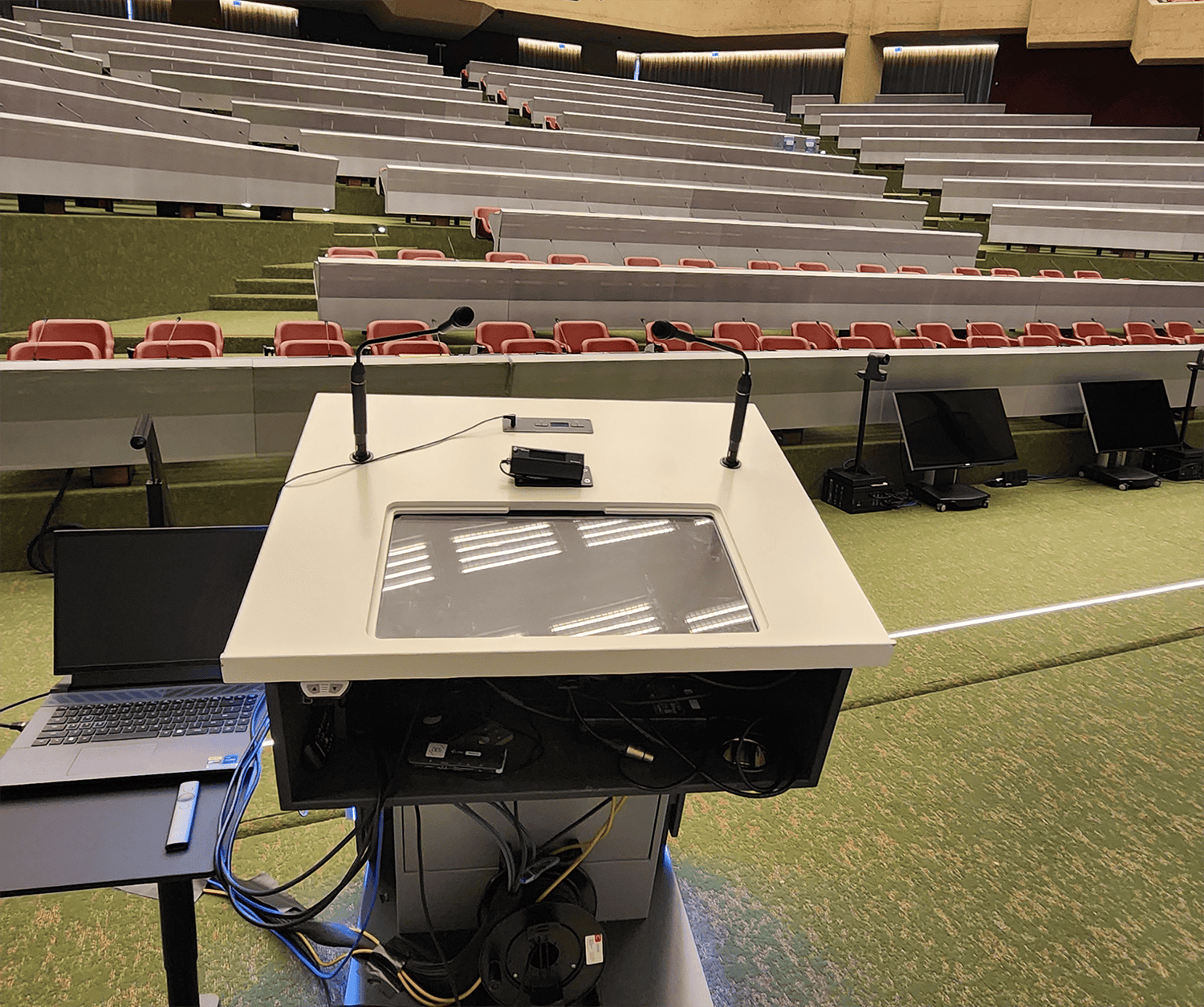
  • On the stage is a lectern with a microphone.
  • Three wireless handheld microphones and one headset microphone are also available for use by speakers and announcers. Clip-on microphones (Lavaliere) are not available.
  • The lectern is equipped with an HDMI cable with USB-C adaptor for video connection, an audio jack, and power outlet. The power outlet accepts Type J (3-pin) plugs and Type C (2-pin Europlug) variants. If you do not have this type of plug, you must bring an adaptor.
  • Two return screens (confidence monitors) face the stage. Speakers can use Presenter Mode for slide presentations.
  • Six chairs are on stage for panel discussions.
  • Each audience row has tables with microphones (one per seat). Per United Nations standard setup, there are rows of observer seats behind each table row that don't have microphones.

Amphitheatre D photos (click to enlarge).
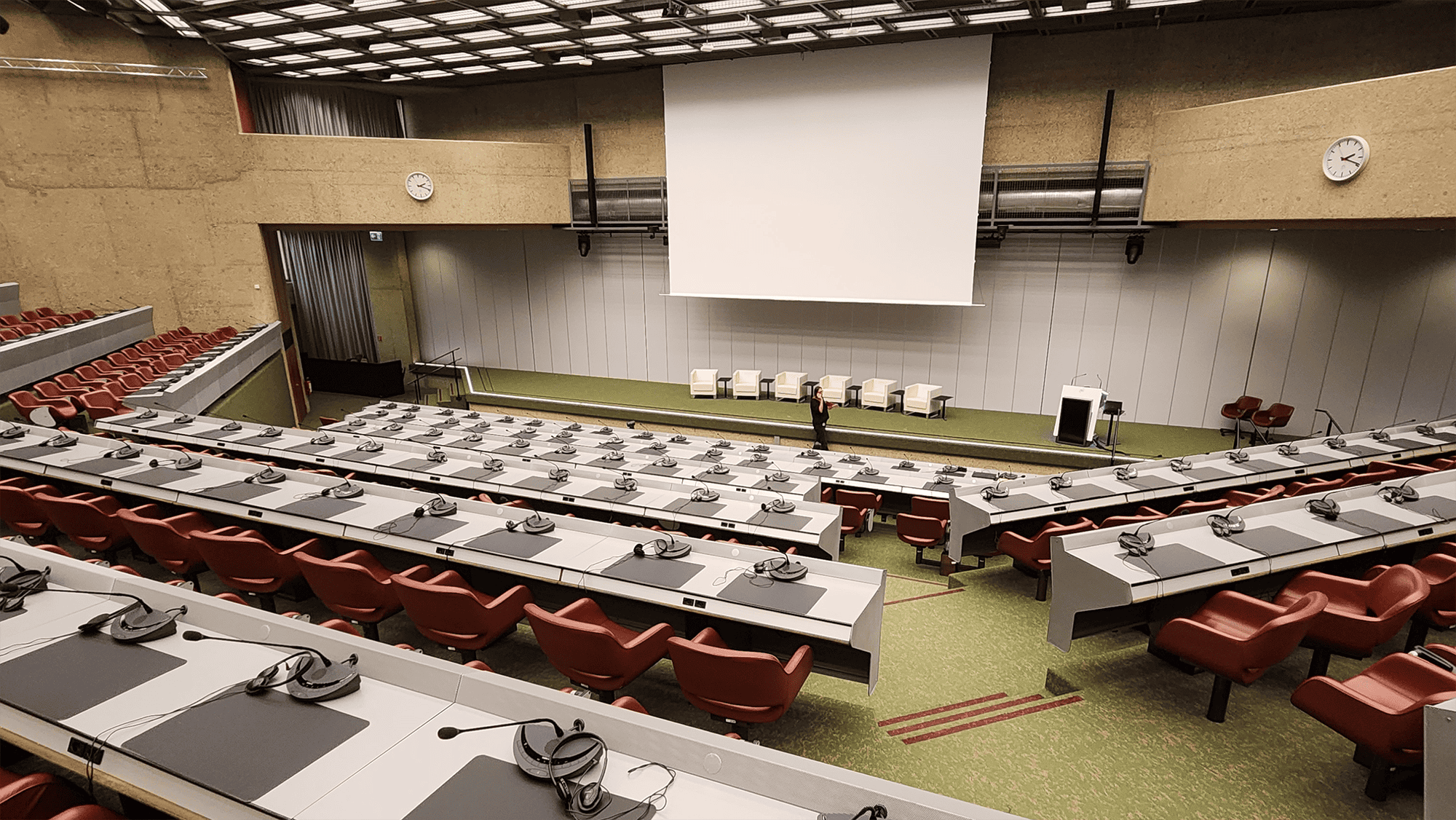
CICG Ampitheatre D Stage CICG Ampitheatre D Lectern

Setting Up for Your Talk

All speakers should arrive in Amphitheatre D thirty minutes before the start of your session. Please note that some sessions are back-to-back, so you may have to arrive prior to the session ahead to yours to setup and test. Please see the Schedule of Events.

You will be presenting from your own laptop computer.

At the lectern, connect your computer to the projector via the HDMI/USB-C cable. Test your presentation, including playing video and audio. (If you do not have a standard HDMI or USB-C port on your laptop, you must bring an adapter.)

If you prefer to use the headset microphone instead of the lectern microphone, ask the AV Technician to set it up and test it.

The screen in the talk room is widescreen format (16:9 aspect ratio), so it’s best to use widescreen slides. Standard slides (4:3 aspect ratio) will work but will have blank space on each side of your slide when projected onto the screen.

Giving Your Presentation

Slide Presentations and Symposium Talks

Slide Presentations are 12 minutes of talk followed by a 3-minute discussion period. Please plan your time so you can complete your presentation in no more than 15 minutes total. Symposium Talks may vary in length as determined by the symposium organizer.

Speakers typically sit in the front row of the audience until it is their time to present. When it is your turn to speak, step up to the lectern and connect your laptop via the HDMI/USB-C cable.

To verify when you are presenting, see the Symposia Schedule or the Slide Sessions Schedule.

Keynote Lectures and Award Lectures

Keynote Lectures are one hour in length. Please plan your talk to be approximately 45 minutes long to allow for introductions and taking questions at the end of your talk.

Awards talks are each 10 minutes talk time, plus 5 minutes for Q&A; except for the Distinguished Career Award, which is 25 minutes talk time, plus 5 minutes for Q&A.

To verify when you are presenting, please see the Schedule of Events.

Working with Interpreters

Sign language interpreters will be present throughout the conference to support accessible communication. If you are not used to working with interpreters, please keep these tips in mind.

  • Always direct your attention and speech to the person you are conversing with, rather than the interpreter.
  • Speak at your natural pace—there’s no need to slow down unnaturally, as interpreters are trained to keep up.
  • Please avoid speaking over others, as interpreters can only interpret one person at a time.
  • Be mindful of visual sight lines so that interpreters and Deaf participants have a clear view of each other.

Technical Assistance

SNL Staff and an AV Technician will be in the Amphitheatre D 30 minutes prior to the start of each session to help you set up your laptop connection and test your presentation. AV Technicians will remain in the audio booth at the back of the amphitheatre throughout the session. If you need help during your session, you can ask for assistance by speaking into the lectern microphone.

SNL Account Login


Forgot Password?
Create an Account

News

2026 Membership is Open - Renew Now!

Meeting Registration is Open.

Symposium Submissions are Closed.

Abstract Submissions are Closed.

Board of Directors Election is Closed.

See Dates & Deadlines for other important dates.

“Lunch with a Professor” Trainee Event

“Lunch with a Professor” Trainee Event

Join us for “Lunch with a Professor” at SNL 2026 in Geneva—Lunch is provided!

Following enthusiastic feedback last year, we are excited to expand the program across three consecutive days. This event offers early-career researchers an informal setting to talk through research ideas, gain candid advice on navigating academia, and build lasting professional connections. Prior to the event, trainees will be matched with faculty based on shared research interests and background.

Schedule & Location

  • Wednesday, September 30: 1:00-2:15 pm
  • Thursday, October 1: 12:45-2:00 pm
  • Friday, October 2: 1:00-2:15 pm
  • Location: Salon Sadako Ogata

Expression of interest

To view the list of participating professors and express your interest, please complete the short 3-minute registration form by September 13: https://forms.gle/2cEcHJsCNWnc333F8

SNL Account Login


Forgot Password?
Create an Account

News

2026 Membership is Open - Renew Now!

Meeting Registration is Open.

Symposium Submissions are Closed.

Abstract Submissions are Closed.

Board of Directors Election is Closed.

See Dates & Deadlines for other important dates.

Welcome Reception

Welcome Reception

Join us for the SNL 2026 Welcome Reception on Tuesday, September 29, from 6:00-8:00 pm at Campus Biotech. Kick off the meeting by reconnecting with colleagues and catching up with friends from around the world while enjoying local Swiss food, beer, and wine. It’s the perfect way to settle into Geneva and connect with the SNL community before the scientific program begins on Wednesday morning.

Sponsored by State of Geneva and Geneva Convention Bureau.

SNL Account Login


Forgot Password?
Create an Account

News

2026 Membership is Open - Renew Now!

Meeting Registration is Open.

Symposium Submissions are Closed.

Abstract Submissions are Closed.

Board of Directors Election is Closed.

See Dates & Deadlines for other important dates.

Slide Information

Slide Information

©Switzerland Tourism, Nicola FuererJan Geerk

The following suggestions are designed to help you prepare a more effective slide presentation.

Presentation Length

Each talk will be 12 minutes, followed by a 3 minute discussion period.

Minimize the Number of Slides

Limiting the number of slides in your presentation will keep your audience attentive and interested.

Choose a Readable Font

Font Style

Choosing the right font style, such as Helvetica or Arial, helps to get your message across. Avoid narrow fonts, such as Arial Narrow, and avoid fonts that include fancy edges, such as Times.

Font Size

Choosing the right font size will enable the audience to read your slides easily. The following measurements indicate the size of a font on your computer screen, not projected on a screen for your audience in full screen mode. To enable full screen mode: select the “View” tab, in the “Presentation Views” group, click “Slide Show.”

  • A one-inch (2.5 cm) letter is readable from 10 feet (3 m).
  • A two-inch (5.0 cm) letter is readable from 20 feet (6 m).
  • A three-inch letter (7.5 cm)  is readable from 30 feet (9 m).

Keep It Short

You want your audience to listen to your presentation, rather than read the screen. Keep your text simple by using bullet points or short sentences. Try to keep each point to one line. Some projectors crop slides at the edges, so long sentences may be cut off. You can remove articles such as “a” and “the” to help reduce the word count on a line.

Use Graphics

Use graphics to help tell your story, but be careful not to overwhelm your audience by adding too many graphics to a slide.

Label Charts and Graphs

Use only enough text to make your chart or graph comprehensible.

Keep Slide Backgrounds Subtle

Choose an appealing, consistent template or theme that is not too eye-catching. You don’t want the background or design to detract from your message.

Template: A file or set of files that contains information about the theme, layout, and other elements of a finished presentation.
Theme: A combination of theme colors, theme fonts, and theme effects. A theme may be applied to a file as a single selection.

Use High Contrast Colors

Choose high contrast colors–a light background with dark colored text or a dark background with light colored text. You can use preset themes to automatically create a visually satisfying contrast level.

Check Spelling and Grammar

To earn and maintain the respect of your audience, always check the spelling and grammar in your presentation.


SNL Account Login


Forgot Password?
Create an Account

News

2026 Membership is Open - Renew Now!

Meeting Registration is Open.

Symposium Submissions are Closed.

Abstract Submissions are Closed.

Board of Directors Election is Closed.

See Dates & Deadlines for other important dates.

International Travel Information

International Travel Information

©Switzerland Tourism, Nicola FuererJan Geerk

International Travelers

We look forward to welcoming you to Switzerland!

To ensure that your stay goes smoothly, you must check whether you need a visa or not, depending on your nationality. EU citizens do not need a visa to stay in Switzerland for less than 90 days. For others, it depends on the agreements that have been made between Switzerland and your country. Before coming to SNL 2026, please consult the official regulations and procedures that apply to you.

Please note that in any case, you are responsible for having the appropriate documents (ID, passport, visa, etc.) for your journey and entry to Switzerland.

SNL Letter of Invite

Attendees who require documentation confirming their participation in the SNL 2026 Annual Meeting may request a visa invitation letter from SNL.

Please note that an invitation letter does not guarantee that a visa will be issued. Visa decisions are made solely by the appropriate Swiss authorities. We strongly encourage attendees requiring a visa to register and request their invitation letter as early as possible to allow adequate time for visa processing.

To request an SNL Letter of Invite, Log in to your SNL Account.


SNL Account Login


Forgot Password?
Create an Account

News

2026 Membership is Open - Renew Now!

Meeting Registration is Open.

Symposium Submissions are Closed.

Abstract Submissions are Closed.

Board of Directors Election is Closed.

See Dates & Deadlines for other important dates.

2026 Awards Session

2026 Awards Session

We are pleased to honor our awardees at the SNL 2026 Awards Session.

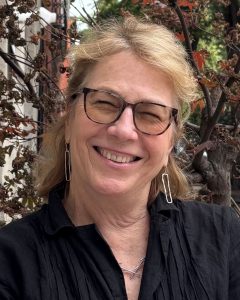
Brenda RappDistinguished Career Award

3:00 - 3:30 pm

Brenda Rapp

Department of Cognitive Science, Johns Hopkins University 

Congratulations to Brenda Rapp, the 2026 recipient of the Distinguished Career Award.


Neurobiology of Language Best Paper Award

3:30 - 3:50 pm

Best Paper Award

Haley C. Dresang, University of Wisconsin

Congratulations to Haley C. Dresang, the 2026 recipient of the Best Paper Award.

Honorable Mention

Deborah Levy, Princeton University

Congratulations to Deborah Levy, the 2026 recipient of the Honorable Mention.

Dissertation Award

3:50 - 4:10 pm

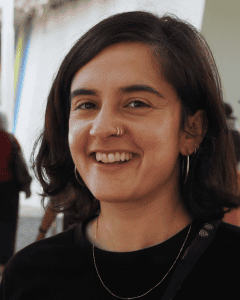
Ilina Bhaya-Grossman

Postdoctoral Fellow, Wu Tsai Neurosciences Institute and Psychology Department, Stanford University 

Congratulations to Ilina Bhaya-Grossman, the 2026 recipient of the Dissertation Award.

Early Career Award

4:10 - 4:30 pm

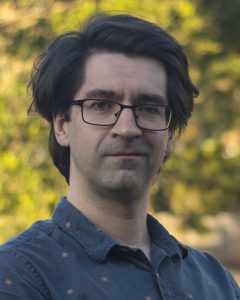
Oscar Woolnough

University of Texas Health Science Center at Houston 

Congratulations to Oscar Woolnough, the 2026 recipient of the Early Career Award.

SNL Account Login


Forgot Password?
Create an Account

News

2026 Membership is Open - Renew Now!

Meeting Registration is Open.

Symposium Submissions are Closed.

Abstract Submissions are Closed.

Board of Directors Election is Closed.

See Dates & Deadlines for other important dates.

Award Winners

Award Winners

Merit Awards

Graduate Student Merit Awards
Pepita Alex, University of Cambridge, University of Aberdeen
Quinn R. Greicius, University of San Francisco

Postdoctoral Merit Awards
Amanda Chirino Pérez, UC Berkeley
Corentin Puffay, KU Leuven, Stanford University

Honorable Mentions
J. Raouf Belkhir, Carnegie Mellon University
Magdalena Kachlicka, Institute of Computer Science, University of Bern, Switzerland, Center for Experimental Neurology and Sleep Wake Epilepsy Center-NeuroTec
Sandra Martin, Max Planck Institute for Human Cognitive and Brain Sciences, Leipzig University
Aakash Sarkar, University of California San Francisco


SNL Account Login


Forgot Password?
Create an Account

News

2026 Membership is Open - Renew Now!

Meeting Registration is Open.

Symposium Submissions are Closed.

Abstract Submissions are Closed.

Board of Directors Election is Closed.

See Dates & Deadlines for other important dates.

2026 Distinguished Career Award Recipient

2026 Distinguished Career Award Recipient

Brenda Rapp

The Society for the Neurobiology of Language is pleased to announce the 2026 Distinguished Career Award recipient: Brenda Rapp

How the brain spells words: A window onto the neurobiology of language

Thursday, October 1, 3:00 - 3:30 pm, Amphitheatre D

Speaker: Brenda Rapp, Department of Cognitive Science, Johns Hopkins University

About Brenda Rapp

Professor Brenda Rapp is a professor in the Cognitive Science Department at Johns Hopkins University, and the long-standing Editor-in-Chief of Cognitive Neuropsychology. She is a leading authority on the processes and representations of written language production.

To understand Brenda’s contributions, it is important to realize that, historically, language production research has been considerably overshadowed by language perception research, and even within language production research, written production has received scarce attention compared to spoken production. Brenda’s monumental contribution has been her tireless efforts in showing that written language production is not only worth studying per se but can also teach us much about how the language production system works. The fruit of this labor is over 150 publications, laying out a foundational framework to guide basic-science studies on written language production, as well as studies of dysgraphia (both acquired and developmental). Without this foundational work these subfields would not be nearly as coherent as they are today. Her body of research has been consistently characterized by its theoretical depth and methodological rigor as well as its commitment to learn from, and contribute to, the study of cognitive deficits.

Brenda is also one of the pioneers of research on the neural basis of written production, using a wide range of converging neural methods. She mapped the neurocognitive architecture of the spelling system with the first fMRI meta-analysis of word spelling (Purcell, et al., 2011) and the first lesion symptom mapping study of the central components of the spelling system (Rapp et al., 2016). This work revealed the neural organization of the spelling system, identifying separable spelling processes that are distinct from analogous spoken language processes. Furthermore, the work showed, for the first time, that the visual word form area (VWFA) is not just for reading, but contains orthographic representations of words, shared by both reading and spelling (Rapp & Lipka, 2011). This set of findings provided a solid basis for her subsequent and more recent work that has exemplified how functional neuroimaging can reveal highly detailed aspects of neural representations and how these are affected by learning, damage, and recovery.

Her team has established the existence of abstract, amodal letter representations within left ventral temporal-occipital cortex (VOTC) that constitute the building blocks of word spellings. The earliest stages of learning the spellings of new words result from the complex interplay between VOTC and subcortical (hippocampal) processes. In re-learning these representations in individuals with post-stroke dysgraphia, graph theoretic work carried out by her team showed that this recovery involves increased local network integration and modularity within the VOTC and increasing neural differentiation resulting in sparser and more compact neural representations. In short, Brenda’s research on the neurobiology of language has provided an increasingly more detailed understanding of the neurocognitive bases of written word production that extends from words to letters, from brain regions and networks to voxels.

In addition to her scientific contributions, Brenda has been an exemplary mentor. She has supported and mentored over 35 graduate students, postdocs, and junior faculty, many of whom have gone on to hold positions in top research institutions. Brenda has also served the field in many capacities, but of particular note is her role in advancing the field of cognitive neuropsychology through her teaching and workshops across the world and for her work for 15 years as the Editor-in-Chief of Cognitive Neuropsychology. Finally, she is the editor of the book “What Deficits Reveal about the Human Mind/Brain: A Handbook of Cognitive Neuropsychology.” - the classic text on cognitive neuropsychological research.

SNL Account Login


Forgot Password?
Create an Account

News

2026 Membership is Open - Renew Now!

Meeting Registration is Open.

Symposium Submissions are Closed.

Abstract Submissions are Closed.

Board of Directors Election is Closed.

See Dates & Deadlines for other important dates.

2026 Early Career Award Recipient

2026 Early Career Award Recipient

Oscar Woolnough

The Society for the Neurobiology of Language is pleased to announce the 2026 Early Career Award recipient: Oscar Woolnough

A spatiotemporal map of literacy in the brain

Thursday, October 1, 4:10 - 4:30 pm, Amphitheatre D

Speaker: Oscar Woolnough, University of Texas Health Science Center at Houston

About Oscar Woolnough

Dr. Oscar Woolnough is an emerging leader in the cognitive neuroscience of language, whose work has significantly advanced our understanding of how the human brain reads, comprehends language, and acquires new words. He holds a BEng in Medical Engineering from Queen Mary, University of London, an MSc in Biomedical Engineering from Imperial College London, and a PhD in Neuroscience from the University of Nottingham.

Dr. Woolnough's research leverages intracranial recordings to investigate the neural representations underpinning reading, exploiting the high spatiotemporal resolution of this technique to track the dynamic spread of information across cortical surfaces and the interactions between multiple functional hubs. By coupling these recordings with direct cortical stimulation, his work establishes causal links between specific brain regions and reading behavior.

His publication record reflects the breadth and rigor of his contributions. Notable work includes spatiotemporal mapping of orthographic and lexical processing in the ventral visual pathway, characterization of frontotemporal networks supporting sentence reading, and dissociation of reading and naming in ventral occipitotemporal cortex. His most recent work has examined how anterior fusiform activity during reading correlates with the memorability of novel words, and how frontotemporal networks causally support concreteness judgments.

Motivated by the real-world challenges of dyslexia and dysgraphia, Dr. Woolnough's research directly links neural activity to behavior, with the long-term goal of illuminating the brain basis of literacy and how reading networks change as new words are incorporated into the lexicon. His contributions, both methodological and empirical, make him an exceptionally deserving recipient of this Early Career Award.

SNL Account Login


Forgot Password?
Create an Account

News

2026 Membership is Open - Renew Now!

Meeting Registration is Open.

Symposium Submissions are Closed.

Abstract Submissions are Closed.

Board of Directors Election is Closed.

See Dates & Deadlines for other important dates.

2026 Dissertation Award Recipient

2026 Dissertation Award Recipient

Ilina Bhaya-Grossman

The Society for the Neurobiology of Language is pleased to announce the 2026 Dissertation Award recipient: Ilina Bhaya-Grossman

From sound to language: Shared and language-specific speech computations in the human temporal cortex

Thursday, October 1, 3:50 - 4:10 pm, Amphitheatre D

Speaker: Ilina Bhaya-Grossman, Postdoctoral Fellow, Wu Tsai Neurosciences Institute and Psychology Department, Stanford University.

About Ilina Bhaya-Grossman

Ilina Bhaya-Grossman completed her PhD under the guidance of Dr. Edward F. Chang through the joint UCSF-UC Berkeley Graduate Program in December 2025. Prior to her graduate studies, Ilina earned her bachelor's degree in Cognitive Science and Computer Science, magna cum laude, from UC Berkeley, where she conducted research in the lab of Dr. Robert Knight. Her dissertation asks how the brain balances the universal and language-specific aspects of speech. Drawing on human intracranial recordings, it proposes an updated model of speech processing in which acoustic and language-specific word-level information are integrated in a shared cortical region, the superior temporal gyrus. Her research has been published in Nature, Neuron, the Annual Review of Psychology, and Nature Biomedical Engineering among others, and her training has been supported by the National Science Foundation Graduate Research Fellowship, the UCSF Discovery Fellowship, and the Kavli Center for Ethics, Science, and the Public.

SNL Account Login


Forgot Password?
Create an Account

News

2026 Membership is Open - Renew Now!

Meeting Registration is Open.

Symposium Submissions are Closed.

Abstract Submissions are Closed.

Board of Directors Election is Closed.

See Dates & Deadlines for other important dates.

  • Page 1
  • Page 2
  • Page 3
  • Page 4
  • Go to Next Page »

©2026 Society for the Neurobiology of Language #SNL2026