Letter of Invite
Please Log In to your SNL Account to request a Letter of Invite.
Please Log In to your SNL Account to request a Letter of Invite.
As part of SNL’s ongoing commitment to inclusivity, we are pleased to announce the Caregiver Support initiative for SNL 2026, to help members with caring duties attending the meeting.
Value: Up to $500 per family. In the event that the number of requests exceeds the funding available, preference will be given to applicants in the early stages of their careers.
Number: Up to 20 grants.
Use of Funds: Recipients can use funds to support any form of family care at the SNL conference that best serves their situation - whether that involves childcare, supporting elderly parents, or other caregiving responsibilities. Note that due to logistical constraints, SNL will not be offering an in-house care program. Recipients will be responsible for organizing their own care solutions. Eligible expenses for the budget can include:
Recommended Childcare Services
Recommendations are coming soon.
How to Apply
Applicants must send a one-page PDF that includes a description of the care needed and a tentative budget. Email your application to by the deadline July 6, 2026.
Receipt of Funds
Recipients should come to the registration desk to receive the subsidy.
Schedule
Applications Open: June 16, 2026
Applications Close: July 6, 2026
Recipient Announced: July 20, 2026
The Election is now open for four Councilor (board member) positions on the Society for the Neurobiology of Language (SNL) Board of Directors.
To vote, Log In to your account and click “Vote in the Board of Directors Election.” You must be a current member to vote. If you're not a current member, you can join SNL by clicking “Pay Membership” on your account home page. If you don't have an SNL Account, please Create An Account.
Voting is now closed.
Each year, four directors are elected: Chair-Elect, Treasurer-Elect, Secretary-Elect and Program Committee Chair-Elect. Directors are elected for a three-year term. Every two years, a Student/Postdoc Representative is elected to a two-year term. Responsibilities associated with all positions can be found in the bylaws.
The 2026 candidates were selected by an independent Nominating Committee from candidates nominated by SNL members.
Click a candidate's name to view their bio.
Ingrid Johnsrude, University of Western Ontario
Stephanie Forkel, Donders Institute for Brain, Cognition and Behaviour and Max Planck Institute for Psycholinguistics
Jonathan R. Brennan, University of Michigan
William Graves, Rutgers University — Newark
Suhail Matar, University of Cambridge
Yi Du, Institute of Psychology, Chinese Academy of Sciences
Laura Gwilliams, Stanford University
Sahil Luthra, Stony Brook University
Marc Joanisse, The University of Western Ontario
Bradford Mahon, Carnegie Mellon University
Simona Brambati, Université de Montréal
Chair: Beth Jefferies, University of York
Treasurer: Tyler Perrachione, Boston University
Secretary: Nai Ding, Zhejiang University
Program Committee Chair: Valentina Borghesani, Université de Genève
Student/Postdoc Rep: Ryan M.C. Law, University of Cambridge
Chair-Elect: Kate Watkins, University of Oxford
Treasurer-Elect: Esti Blanco-Elorrieta, New York University
Secretary-Elect: Maria Ivanova, University of California, Berkeley
Program Committee Chair-Elect: Leonardo Fernandino, Medical College of Wisconsin
Past Chair: Jonathan Peelle, Northeastern University
Past Treasurer: Francesca Branzi, University of Liverpool
Past Secretary: Simona Mancini, Basque Center on Cognition, Brain, and Language
Past Program Committee Chair: Katrien Segaert, University of Birmingham
Past Student/Postdoc Rep: Xin Sun, University of British Columbia
| The Eighteenth Annual Meeting of the Society for the Neurobiology of Language will take place at the Le Centre International de Conférences de Genève (CICG) from September 29 - October 02, 2026.
For the convenience of our meeting attendees, SNL has arranged special room rates at three hotels located near Le Centre International de Conférences de Genève (CICG): Ibis Genève Centre Nations, Hotel Jade, and Hotel Mon-Repos. Hotel Jade is a 20-minute walk or a 9-minute public transit ride to CIGC. Ibis Genève Centre Nations is a 12-minute walk or a 12-minute transit ride to the venue. Hotel Mon-Repos is a 35-minute walk or 12-minute public transit ride to CICG. We urge you to reserve your hotel room early; the city of Geneva fills up in October and it will be difficult to find availability. For your convenience we've added a currency converter to this webpage. The deadline to reserve a hotel room is August 30, 2026 for Hotel Jade and Ibis Geneve and August 15, 2026 for Hotel Mon-Repos or until the SNL room blocks are sold out. |
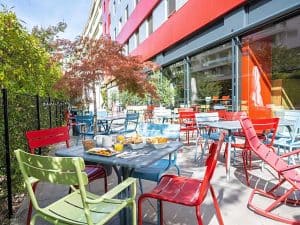 Single Room - CHF 190 (~240 USD)
1 Twin Room - CHF 210 (~265 USD)
Double Bed Standard - CHF 210 (~265 USD)
Ibis Genève Center Nations is located in the center of Geneva, just 2625 feet from Cornavin Train Station and all the leisure attractions and business facilities such as the International organizations and CICG. It offers modern rooms with attached bathroom with a flat-screen cable TV, as well as free Wi-Fi access in the entire hotel. Guests of the Center Nations Ibis benefit from a 24-hour reception and a bar serving drinks and snacks around the clock. Lake Geneva and the international organizations are 1.2 mi away, and Geneva Airport is 2.5 mi away. A complimentary public transpiration pass for Geneva will be provided for the duration of your stay, allowing unlimited travel on all public transportation.
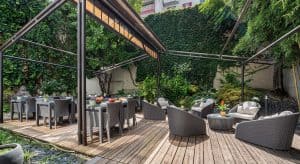 Single Room - CHF 240 (~305 USD)
Double Occupancy - CHF 260 (~330 USD)
Hotel Jade is a true haven of peace. Its rooms offer far more than one might expect from a 3-star hotel in Geneva. A Feng Shui master and his protégé traveled from China to advise the hotel's management and architect, helping to optimize energy flows and create an environment that promotes guest wellbeing. Guests also receive a complimentary Geneva public transportation pass for the duration of their stay, providing unlimited travel on the city's public transit network. A complimentary public transpiration pass for Geneva will be provided for the duration of your stay, allowing unlimited travel on all public transportation.
Single Occupancy - CHF 230 (~290 USD)
Double Occupancy - CHF 255 (~325 USD)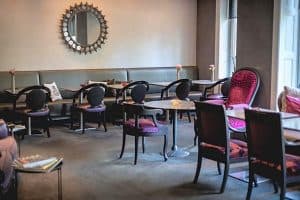
Hotel Mon Repos is a true urban retreat. Its elegantly decorated rooms, complete with a mini-bar, flat-screen TV, and free WiFi, offer a level of comfort and style that exceeds expectations. Whether unwinding in the relaxing lounge or savoring local Geneva beers, fine wines, and cocktails at the bar, guests can enjoy an atmosphere designed to leave them feeling refreshed and inspired. A complimentary public transpiration pass for Geneva will be provided for the duration of your stay, allowing unlimited travel on all public transportation.
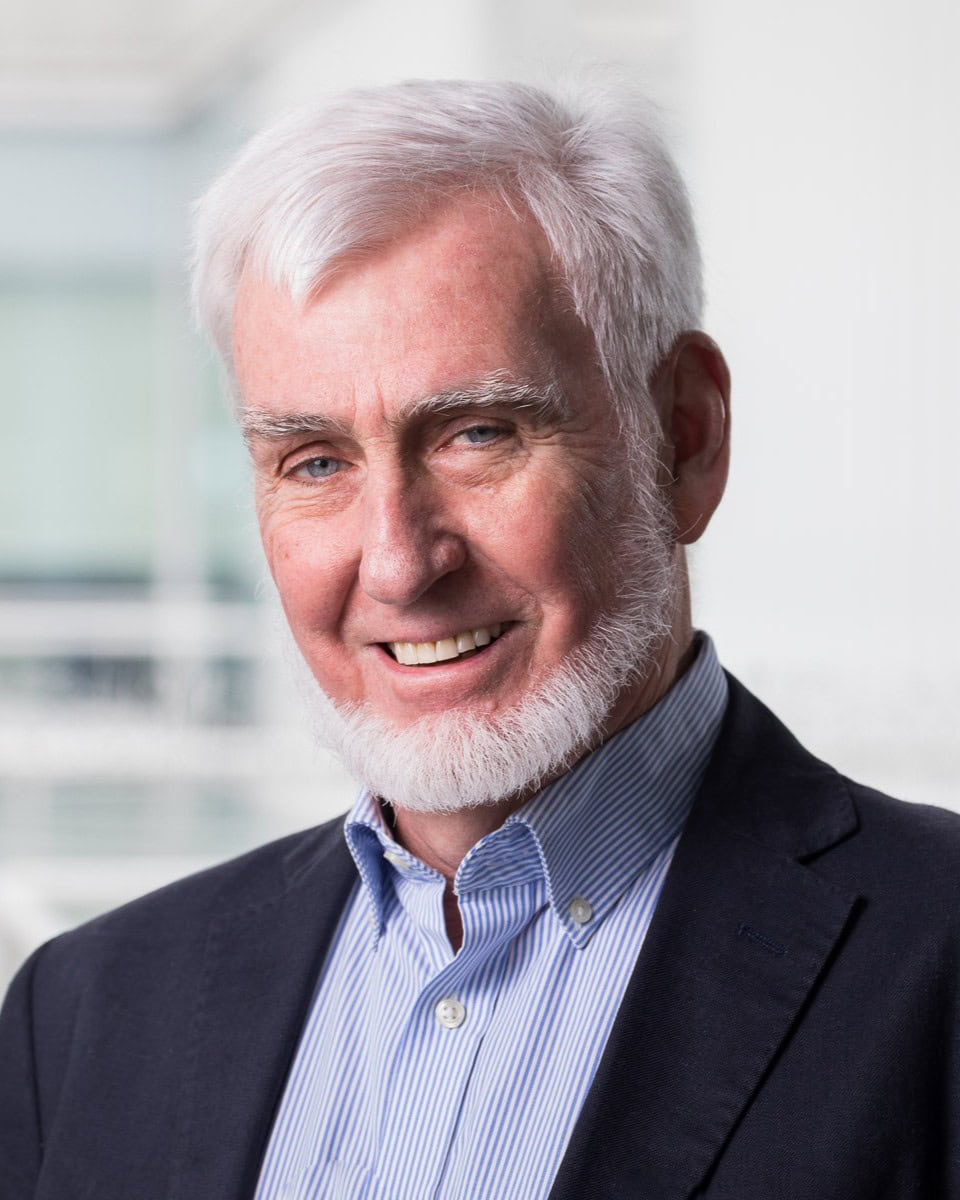 What the Rodent Hippocampus Can Tell Us About Spatial Language
Speaker: John O'Keefe, PhD, University College London
On the assumption that language did not appear de novo with humans, we can ask whether our current understanding of brain function in lower mammals provides us with clues about the biological underpinnings of some aspects of language. One fruitful approach is suggested by our understanding of the mechanisms of spatial memory and navigation instantiated in the rodent hippocampus. We know from work on patients with unilateral hippocampal lesions that the left hippocampus is involved in memory for narratives and other verbal material. In vector grammar theory, I explore how our current models of the rodent cognitive map suggest how processes there might underpin some aspects of grammar, in particular those carried by the prepositions, and the case structure of some languages. The hippocampal cognitive map provides the animal with a cognitive representation of its environment which supports three different aspects of spatial behavior: it identifies the animal’s current location in a familiar environment, the contents of places including rewards and punishments, and provides a mechanism for supporting flexible navigation from any place in the environment to any goal location. An important feature of these representations and capacities is the use of vector fields in their construction, retrieval, and manipulation and it is this feature I will use to think about human spatial language. I will argue that the meanings of most of the prepositions which are common features of most languages can be represented by aspects of vector fields. To take one example, the prepositional phrase “ from place x to place y” can be represented by the summation of two vector fields, the “ from” by a divergent vector field with all the vector tails originating in x, and the “to” by a convergent vector field with all its vector heads terminating in location y. Furthermore, the case structure of many languages lends itself to a similar analysis with different cases denoting different relationships to the vector field. To take an example, in Latin the ablative case identifies the object of the preposition “from”, and therefore would identify the name of the place or object at the origin of a divergent vector field while the accusative case represents the object of the preposition “to” and would similarly identify the name of the place or object at the head of a convergent vector field. Finally, I acknowledge that spatial language is only a small part of language and will say a few brief words about the extension of the basic spatial language to other non-spatial realms by the use of metaphors in the manner of George Lakoff.
John O’Keefe FRS is Professor of Cognitive Neuroscience at the Sainsbury Wellcome Centre, a member of the Cell and Developmental Biology department at University College London, and a Principal Research Fellow of the Wellcome Trust. He was awarded the Nobel Prize in Physiology and Medicine in 2014.
He is interested in the role of the hippocampal formation of the temporal lobe in spatial and episodic memory, and navigation. He discovered that hippocampal pyramidal cells in the rat respond selectively to an animal’s spatial location and proposed that these ‘place cells’, and the hippocampal system more generally, functions as a cognitive map underpinning spatial localization and navigation. In 1993, he discovered phase precession, the coding of location by the timing of place cell spiking relative to the hippocampal theta rhythm, still the best evidence for neural coding by spike timing. With Neil Burgess and Eleanor Maguire, he showed how the cognitive map theory could be used to understand the role of the human hippocampus in navigation and episodic memory.
In current work, his group is studying how the cognitive map supports flexible navigation to a goal in a familiar environment using vector fields. He is also investigating how this vector field model can be used to underpin some aspects of spatial language with particular attention to prepositions and case endings.