• Skip to main content

Society for the Neurobiology of Language

  • Home
    • SNL Account
    • Contact Us
  • Society
    • About SNL
    • Membership Information
    • Member-Initiated Virtual Activities
    • Society Organization
    • Student/Postdoc Representative
    • Code of Conduct
    • Society Journal
    • SNL Bylaws
    • Past Meetings
    • Past Board Members
    • Future Meetings & Proposals
  • Attend
    • Dates & Deadlines
    • Meeting Registration
    • Presenter Information
      • Speaker Instructions
      • Poster Information
      • Slide Information
    • Hotel Reservations
    • Accessibility Information
    • Venue Information
    • Visit Geneva
    • Educational Courses
    • Caregiver Support
    • Onsite Lunch
    • Networking
    • Travel Information
      • Transportation
      • Flight Discounts
      • International Travel
  • Program
    • Schedule of Events
    • Keynote Lectures
      • John O’Keefe
      • Yanchao Bi
      • Roy Hamilton
    • 2026 Awards Session
      • 2026 Distinguished Career Award Recipient
      • 2026 Neurobiology of Language Best Paper Award Recipients
      • 2026 Dissertation Award Recipient
      • 2026 Early Career Award Recipient
    • Symposia
    • Slide Sessions
    • Poster Sessions
    • Panel Session
    • “Lunch with a Professor” Trainee Event
    • Welcome Reception
    • Search Abstracts
  • Awards
    • Awards Information
    • Merit Awards
      • Award Winners
    • Distinguished Career Award
      • 2026 Distinguished Career Award Recipient
    • Neurobiology of Language Best Paper Award
      • 2026 Neurobiology of Language Best Paper Award Recipients
    • Dissertation Award
      • 2026 Dissertation Award Recipient
    • Early Career Award
      • 2026 Early Career Award Recipient
    • Past Award Recipients
  • Submissions
    • Symposium Submissions
    • Abstract Submissions
    • Submissions FAQ
  • Sponsor/Exhibit
    • 2026 Sponsors
    • 2026 Exhibitors
    • Sponsor / Exhibit Info

Awards

Neurobiology of Language Best Paper Award 2026

Neurobiology of Language Best Paper Award 2026

Thursday, October 1, 3:30 - 3:50 pm, Amphitheatre D

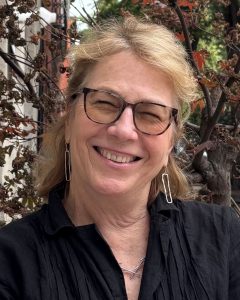
The Editors-in-Chief of the society’s journal, Neurobiology of Language, have selected two top papers from Volume 6 (2025) to receive the Best Paper Award and Honorable Mention for the current year. Haley C. Dresang, recipient of the Best Paper Award, and Deborah Levy, recipient of the Honorable Mention, will be recognized on stage, with Deborah Levy also giving a short talk.

Best Paper Award

Haley C. Dresang, University of Wisconsin, receives the Best Paper Award for the paper:

Semantic and Phonological Abilities Inform Efficacy of Transcranial Magnetic Stimulation on Sustained Aphasia Treatment Outcomes
Neurobiology of Language, Volume 6: 2025

Honorable Mention

Deborah Levy, Princeton University, receives an Honorable Mention for the paper:

Role for Left Dorsomedial Prefrontal Cortex in Self-Generated, but not Externally Cued, Language Production
Neurobiology of Language, Volume 6: 2025
SNL Account Login


Forgot Password?
Create an Account

News

2026 Membership is Open - Renew Now!

Meeting Registration is Open.

Symposium Submissions are Closed.

Abstract Submissions are Closed.

Board of Directors Election is Closed.

See Dates & Deadlines for other important dates.

“Lunch with a Professor” Trainee Event

“Lunch with a Professor” Trainee Event

Join us for “Lunch with a Professor” at SNL 2026 in Geneva—Lunch is provided!

Following enthusiastic feedback last year, we are excited to expand the program across three consecutive days. This event offers early-career researchers an informal setting to talk through research ideas, gain candid advice on navigating academia, and build lasting professional connections. Prior to the event, trainees will be matched with faculty based on shared research interests and background.

Schedule & Location

  • Wednesday, September 30: 1:00-2:15 pm
  • Thursday, October 1: 12:45-2:00 pm
  • Friday, October 2: 1:00-2:15 pm
  • Location: Salon Sadako Ogata

Expression of interest

To view the list of participating professors and express your interest, please complete the short 3-minute registration form by September 13: https://forms.gle/2cEcHJsCNWnc333F8

SNL Account Login


Forgot Password?
Create an Account

News

2026 Membership is Open - Renew Now!

Meeting Registration is Open.

Symposium Submissions are Closed.

Abstract Submissions are Closed.

Board of Directors Election is Closed.

See Dates & Deadlines for other important dates.

Welcome Reception

Welcome Reception

Join us for the SNL 2026 Welcome Reception on Tuesday, September 29, from 6:00-8:00 pm at Campus Biotech. Kick off the meeting by reconnecting with colleagues and catching up with friends from around the world while enjoying local Swiss food, beer, and wine. It’s the perfect way to settle into Geneva and connect with the SNL community before the scientific program begins on Wednesday morning.

Sponsored by State of Geneva and Geneva Convention Bureau.

SNL Account Login


Forgot Password?
Create an Account

News

2026 Membership is Open - Renew Now!

Meeting Registration is Open.

Symposium Submissions are Closed.

Abstract Submissions are Closed.

Board of Directors Election is Closed.

See Dates & Deadlines for other important dates.

2026 Awards Session

2026 Awards Session

We are pleased to honor our awardees at the SNL 2026 Awards Session.

Brenda RappDistinguished Career Award

3:00 - 3:30 pm

Brenda Rapp

Department of Cognitive Science, Johns Hopkins University 

Congratulations to Brenda Rapp, the 2026 recipient of the Distinguished Career Award.


Neurobiology of Language Best Paper Award

3:30 - 3:50 pm

Best Paper Award

Haley C. Dresang, University of Wisconsin

Congratulations to Haley C. Dresang, the 2026 recipient of the Best Paper Award.

Honorable Mention

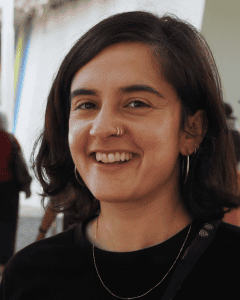
Deborah Levy, Princeton University

Congratulations to Deborah Levy, the 2026 recipient of the Honorable Mention.

Dissertation Award

3:50 - 4:10 pm

Ilina Bhaya-Grossman

Postdoctoral Fellow, Wu Tsai Neurosciences Institute and Psychology Department, Stanford University 

Congratulations to Ilina Bhaya-Grossman, the 2026 recipient of the Dissertation Award.

Early Career Award

4:10 - 4:30 pm

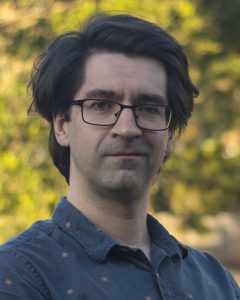
Oscar Woolnough

University of Texas Health Science Center at Houston 

Congratulations to Oscar Woolnough, the 2026 recipient of the Early Career Award.

SNL Account Login


Forgot Password?
Create an Account

News

2026 Membership is Open - Renew Now!

Meeting Registration is Open.

Symposium Submissions are Closed.

Abstract Submissions are Closed.

Board of Directors Election is Closed.

See Dates & Deadlines for other important dates.

Award Winners

Award Winners

Merit Awards

Graduate Student Merit Awards
Pepita Alex, University of Cambridge, University of Aberdeen
Quinn R. Greicius, University of San Francisco

Postdoctoral Merit Awards
Amanda Chirino Pérez, UC Berkeley
Corentin Puffay, KU Leuven, Stanford University

Honorable Mentions
J. Raouf Belkhir, Carnegie Mellon University
Magdalena Kachlicka, Institute of Computer Science, University of Bern, Switzerland, Center for Experimental Neurology and Sleep Wake Epilepsy Center-NeuroTec
Sandra Martin, Max Planck Institute for Human Cognitive and Brain Sciences, Leipzig University
Aakash Sarkar, University of California San Francisco


SNL Account Login


Forgot Password?
Create an Account

News

2026 Membership is Open - Renew Now!

Meeting Registration is Open.

Symposium Submissions are Closed.

Abstract Submissions are Closed.

Board of Directors Election is Closed.

See Dates & Deadlines for other important dates.

2026 Distinguished Career Award Recipient

2026 Distinguished Career Award Recipient

Brenda Rapp

The Society for the Neurobiology of Language is pleased to announce the 2026 Distinguished Career Award recipient: Brenda Rapp

How the brain spells words: A window onto the neurobiology of language

Thursday, October 1, 3:00 - 3:30 pm, Amphitheatre D

Speaker: Brenda Rapp, Department of Cognitive Science, Johns Hopkins University

About Brenda Rapp

Professor Brenda Rapp is a professor in the Cognitive Science Department at Johns Hopkins University, and the long-standing Editor-in-Chief of Cognitive Neuropsychology. She is a leading authority on the processes and representations of written language production.

To understand Brenda’s contributions, it is important to realize that, historically, language production research has been considerably overshadowed by language perception research, and even within language production research, written production has received scarce attention compared to spoken production. Brenda’s monumental contribution has been her tireless efforts in showing that written language production is not only worth studying per se but can also teach us much about how the language production system works. The fruit of this labor is over 150 publications, laying out a foundational framework to guide basic-science studies on written language production, as well as studies of dysgraphia (both acquired and developmental). Without this foundational work these subfields would not be nearly as coherent as they are today. Her body of research has been consistently characterized by its theoretical depth and methodological rigor as well as its commitment to learn from, and contribute to, the study of cognitive deficits.

Brenda is also one of the pioneers of research on the neural basis of written production, using a wide range of converging neural methods. She mapped the neurocognitive architecture of the spelling system with the first fMRI meta-analysis of word spelling (Purcell, et al., 2011) and the first lesion symptom mapping study of the central components of the spelling system (Rapp et al., 2016). This work revealed the neural organization of the spelling system, identifying separable spelling processes that are distinct from analogous spoken language processes. Furthermore, the work showed, for the first time, that the visual word form area (VWFA) is not just for reading, but contains orthographic representations of words, shared by both reading and spelling (Rapp & Lipka, 2011). This set of findings provided a solid basis for her subsequent and more recent work that has exemplified how functional neuroimaging can reveal highly detailed aspects of neural representations and how these are affected by learning, damage, and recovery.

Her team has established the existence of abstract, amodal letter representations within left ventral temporal-occipital cortex (VOTC) that constitute the building blocks of word spellings. The earliest stages of learning the spellings of new words result from the complex interplay between VOTC and subcortical (hippocampal) processes. In re-learning these representations in individuals with post-stroke dysgraphia, graph theoretic work carried out by her team showed that this recovery involves increased local network integration and modularity within the VOTC and increasing neural differentiation resulting in sparser and more compact neural representations. In short, Brenda’s research on the neurobiology of language has provided an increasingly more detailed understanding of the neurocognitive bases of written word production that extends from words to letters, from brain regions and networks to voxels.

In addition to her scientific contributions, Brenda has been an exemplary mentor. She has supported and mentored over 35 graduate students, postdocs, and junior faculty, many of whom have gone on to hold positions in top research institutions. Brenda has also served the field in many capacities, but of particular note is her role in advancing the field of cognitive neuropsychology through her teaching and workshops across the world and for her work for 15 years as the Editor-in-Chief of Cognitive Neuropsychology. Finally, she is the editor of the book “What Deficits Reveal about the Human Mind/Brain: A Handbook of Cognitive Neuropsychology.” - the classic text on cognitive neuropsychological research.

SNL Account Login


Forgot Password?
Create an Account

News

2026 Membership is Open - Renew Now!

Meeting Registration is Open.

Symposium Submissions are Closed.

Abstract Submissions are Closed.

Board of Directors Election is Closed.

See Dates & Deadlines for other important dates.

2026 Early Career Award Recipient

2026 Early Career Award Recipient

Oscar Woolnough

The Society for the Neurobiology of Language is pleased to announce the 2026 Early Career Award recipient: Oscar Woolnough

A spatiotemporal map of literacy in the brain

Thursday, October 1, 4:10 - 4:30 pm, Amphitheatre D

Speaker: Oscar Woolnough, University of Texas Health Science Center at Houston

About Oscar Woolnough

Dr. Oscar Woolnough is an emerging leader in the cognitive neuroscience of language, whose work has significantly advanced our understanding of how the human brain reads, comprehends language, and acquires new words. He holds a BEng in Medical Engineering from Queen Mary, University of London, an MSc in Biomedical Engineering from Imperial College London, and a PhD in Neuroscience from the University of Nottingham.

Dr. Woolnough's research leverages intracranial recordings to investigate the neural representations underpinning reading, exploiting the high spatiotemporal resolution of this technique to track the dynamic spread of information across cortical surfaces and the interactions between multiple functional hubs. By coupling these recordings with direct cortical stimulation, his work establishes causal links between specific brain regions and reading behavior.

His publication record reflects the breadth and rigor of his contributions. Notable work includes spatiotemporal mapping of orthographic and lexical processing in the ventral visual pathway, characterization of frontotemporal networks supporting sentence reading, and dissociation of reading and naming in ventral occipitotemporal cortex. His most recent work has examined how anterior fusiform activity during reading correlates with the memorability of novel words, and how frontotemporal networks causally support concreteness judgments.

Motivated by the real-world challenges of dyslexia and dysgraphia, Dr. Woolnough's research directly links neural activity to behavior, with the long-term goal of illuminating the brain basis of literacy and how reading networks change as new words are incorporated into the lexicon. His contributions, both methodological and empirical, make him an exceptionally deserving recipient of this Early Career Award.

SNL Account Login


Forgot Password?
Create an Account

News

2026 Membership is Open - Renew Now!

Meeting Registration is Open.

Symposium Submissions are Closed.

Abstract Submissions are Closed.

Board of Directors Election is Closed.

See Dates & Deadlines for other important dates.

2026 Dissertation Award Recipient

2026 Dissertation Award Recipient

Ilina Bhaya-Grossman

The Society for the Neurobiology of Language is pleased to announce the 2026 Dissertation Award recipient: Ilina Bhaya-Grossman

From sound to language: Shared and language-specific speech computations in the human temporal cortex

Thursday, October 1, 3:50 - 4:10 pm, Amphitheatre D

Speaker: Ilina Bhaya-Grossman, Postdoctoral Fellow, Wu Tsai Neurosciences Institute and Psychology Department, Stanford University.

About Ilina Bhaya-Grossman

Ilina Bhaya-Grossman completed her PhD under the guidance of Dr. Edward F. Chang through the joint UCSF-UC Berkeley Graduate Program in December 2025. Prior to her graduate studies, Ilina earned her bachelor's degree in Cognitive Science and Computer Science, magna cum laude, from UC Berkeley, where she conducted research in the lab of Dr. Robert Knight. Her dissertation asks how the brain balances the universal and language-specific aspects of speech. Drawing on human intracranial recordings, it proposes an updated model of speech processing in which acoustic and language-specific word-level information are integrated in a shared cortical region, the superior temporal gyrus. Her research has been published in Nature, Neuron, the Annual Review of Psychology, and Nature Biomedical Engineering among others, and her training has been supported by the National Science Foundation Graduate Research Fellowship, the UCSF Discovery Fellowship, and the Kavli Center for Ethics, Science, and the Public.

SNL Account Login


Forgot Password?
Create an Account

News

2026 Membership is Open - Renew Now!

Meeting Registration is Open.

Symposium Submissions are Closed.

Abstract Submissions are Closed.

Board of Directors Election is Closed.

See Dates & Deadlines for other important dates.

2025 Distinguished Career Award Recipient

2025 Distinguished Career Award Recipient

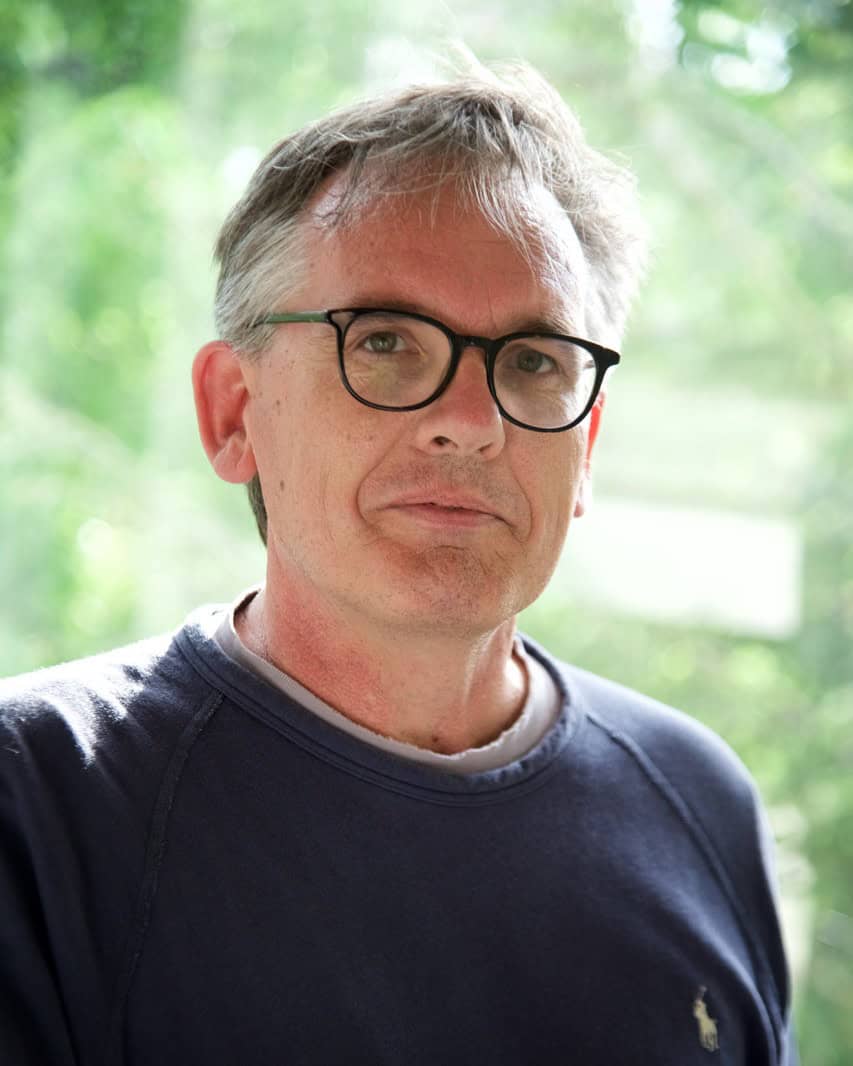
David Poeppel

The Society for the Neurobiology of Language is pleased to announce the 2025 Distinguished Career Award recipient: David Poeppel

The Distinguished Career Award is generously sponsored by Language, Cognition and Neuroscience.

Rhythms and algorithms: The temporal structure of linguistic experience

Saturday, September 13, 2025, 9:00 - 9:45 am, Elstad Auditorium

Speaker: David Poeppel, Max Planck Society, New York University

About David Poeppel

Professor David Poeppel is an internationally acclaimed cognitive neuroscientist who is currently Professor of Psychology and Neuroscience at New York University, and Director of the Max Planck Institute for Empirical Aesthetics in Frankfurt. David Poeppel is a leading figure in the field of auditory neuroscience and neuroscience of language and author of more than 230 articles in prestigious neuroscience and cognitive science journals.

This remarkable body of work is not merely a collection of scientific papers, but a transformative program of research for the neurobiology of language. Throughout his career, David Poeppel has advanced the theoretical and empirical understanding of the neural foundations of speech and language processing and, most importantly, how the two interface. His unwavering advocacy for establishing a robust linking hypothesis between linguistics and neuroscience stands as a defining cornerstone for the field. David Poeppel's work and his influential voice have been instrumental in the growing field of neurobiology of language. He played a pivotal role in the founding and the nurturing of the Society for Neurobiology of Language.

David Poeppel’s theoretical and empirical contributions are broad and profound. His Asymmetric Sampling in Time (AST) hypothesis has been foundational in revolutionizing our understanding of temporal integration and lateralization in auditory processing (Poeppel, 2003). Subsequently, the "dual-stream model" of speech processing, developed in tandem with Gregory Hickok (Hickok & Poeppel, 2007), shifted the paradigm by proposing that language processing unfolds along two interconnected neural pathways, ventral and dorsal, marking a definitive departure from the classical Wernicke-Lichtheim-Geschwind model toward a more sophisticated and empirically grounded understanding of language architecture. His collaboration with Anne-Lise Giraud (Giraud & Poeppel, 2012) produced an influential and biologically plausible framework for speech parsing in which cortical rhythms - theta and gamma in particular – encode the temporal structure of speech with remarkable precision. Together with his students and postdocs, David Poeppel carried out some of the most highly cited and impactful empirical studies in the neurobiology of language recognized for their conceptual innovation, experimental rigor, and elegance.

Last and not least, David Poeppel exemplifies the qualities of an exceptional mentor who has profoundly influenced the next generation of scientists, particularly women. He has supervised over 30 PhD students and more than 40 postdocs – many having a significant presence in the field of cognitive neuroscience at large – and inspired countless others through summer courses, engaging lectures, online debates and podcasts.


SNL Account Login


Forgot Password?
Create an Account

News

2026 Membership is Open - Renew Now!

Meeting Registration is Open.

Symposium Submissions are Closed.

Abstract Submissions are Closed.

Board of Directors Election is Closed.

See Dates & Deadlines for other important dates.

Caregiver Support

Caregiver Support

As part of SNL’s ongoing commitment to inclusivity, we are pleased to announce the Caregiver Support initiative for SNL 2026, to help members with caring duties attending the meeting.

Value: Up to $500 per family. In the event that the number of requests exceeds the funding available, preference will be given to applicants in the early stages of their careers.

Number: Up to 20 grants.

Use of Funds: Recipients can use funds to support any form of family care at the SNL conference that best serves their situation - whether that involves childcare, supporting elderly parents, or other caregiving responsibilities. Note that due to logistical constraints, SNL will not be offering an in-house care program. Recipients will be responsible for organizing their own care solutions. Eligible expenses for the budget can include:

  • Third party dependent care services for the duration of the conference.
  • Travel costs for the designated caregiver.
  • Per diem of up to $50/day for the designated caregiver.

Recommended Childcare Services

Recommendations are coming soon. 

How to Apply

Applicants must send a one-page PDF that includes a description of the care needed and a tentative budget. Email your application to by the deadline July 6, 2026. 

Receipt of Funds

Recipients should come to the registration desk to receive the subsidy.

Schedule

Applications Open: June 16, 2026
Applications Close: July 6, 2026
Recipient Announced: July 20, 2026

SNL Account Login


Forgot Password?
Create an Account

News

2026 Membership is Open - Renew Now!

Meeting Registration is Open.

Symposium Submissions are Closed.

Abstract Submissions are Closed.

Board of Directors Election is Closed.

See Dates & Deadlines for other important dates.

  • Page 1
  • Page 2
  • Page 3
  • Go to Next Page »

©2026 Society for the Neurobiology of Language #SNL2026